When comparing hard water vs. soft water, the difference extends beyond how your water feels to its impact on your entire home. Hard water, which is in 85% of homes in the U.S., contains high levels of hardness minerals like calcium and magnesium that leave stubborn scale buildups in pipes and appliances, while also contributing to dry, irritated skin and brittle hair. These mineral buildups—often seen as chalky limescale—are tough to remove and can lead to costly plumber visits when they accumulate in pipes. Because soft water doesn’t contain hardness minerals that build up, it means fewer plumbing headaches and appliances that last longer.
Many homeowners who are tired of scale buildup and looking to improve water quality turn to water treatment systems to solve these problems and protect their homes. At Leaf Home Water Solutions, we help households choose the right home water treatment systems from salt-based softeners to salt-free water conditioners.
In this article:
- Soft Water vs Hard Water: What’s the Difference?
- How to Tell If You Have Soft or Hard Water
- How to Treat Hard Water
- Can a Water Filter Get Rid of Hard Water?
- Ready For Softer Water In Your Home?
Soft Water vs Hard Water: What’s the Difference?
The key difference between soft and hard water is the presence of the minerals calcium and magnesium. Understanding hard and soft water, along with the benefits and disadvantages of each, is essential for finding the best home water system solution.
What is Hard Water?
Hard water is water with high levels of calcium and magnesium. Water picks up minerals when it travels through soil and rocks, particularly in regions with limestone, chalk, or gypsum deposits. This is why water hardness varies by location. To see how your area is affected, check out our comprehensive guide on water hardness by state.
While high mineral content may sound like a good thing, calcium and magnesium can cause unwanted build-ups in pipes that lead to costly repairs and a shorter lifespan of appliances.
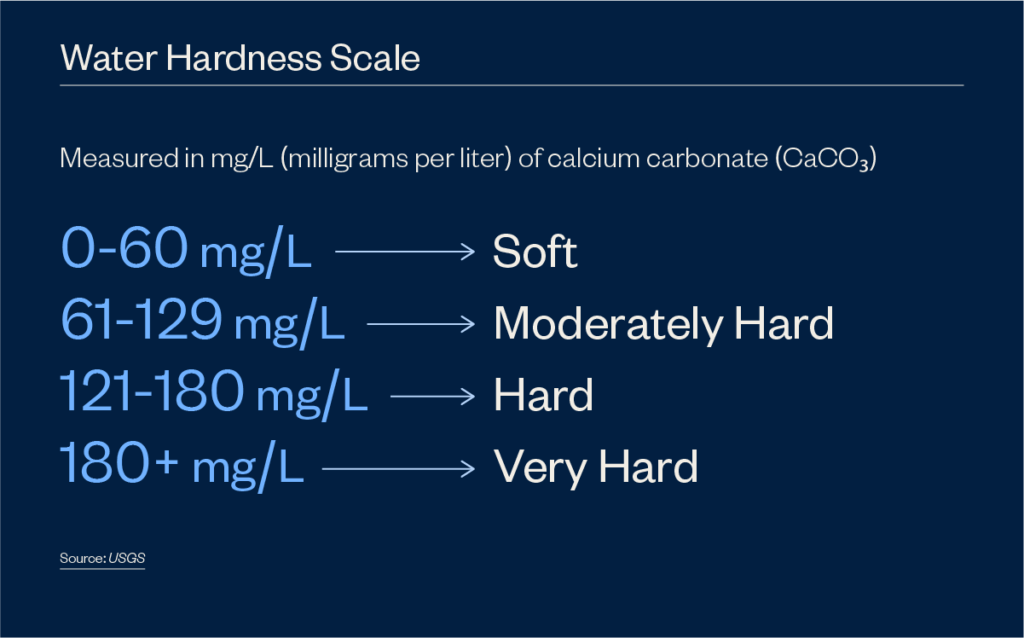
The hardness of water is measured by calcium content, where less than 60 mg/L (soft), 61-120 mg/L (moderately hard), 121-180 mg/L (hard), and over 181 mg/L (very hard).
Is Hard Water Bad for Your Health?
While hard water doesn’t pose serious health risks, it can negatively impact the quality and comfort of hair, skin, and nails. Those with sensitive skin or conditions such as eczema or psoriasis can experience further irritation from hard water. Mineral buildup disrupts the natural balance of oils in the skin, leading to dryness and itchiness. A tight feeling in the skin or dullness in appearance can be a result of hard water. Mineral build-ups can cause itchy scalps and hair that becomes brittle and lacks shine. These same build-ups create problems in appliances and prevent soaps from being able to lather, which may result in dishes with a sheen or grey film that don’t get completely clean.
What is Soft Water?
Soft water is water with reduced amounts of hard minerals, magnesium and calcium. While some waters are naturally softer due to a lower presence of minerals, most soft water is a result of treatment by water softening systems. Systems that soften water use a few different methods. The most common is ion-exchange, where calcium and magnesium ions are traded for sodium ions.
The Benefits of Soft Water
From saving money on detergent to hair that truly shines, soft water is popular for a reason. With calcium and magnesium removed, soaps are free to fully lather and go further. Cleaning showers and bathrooms is easier with less soap scum to battle. Important water-based appliances, like dishwashers and washing machines, will benefit from an extended lifespan and fewer repairs. Sensitive skin and those with psoriasis avoid damaging dryness and experience greater comfort, while all skin benefits from less mineral residues. Dishes come out cleaner and clothes feel smoother, and they keep their color longer.
The Disadvantages of Soft Water
There are a few drawbacks to consider with soft water, such as using ion exchange systems that require salt to swap out the magnesium ions, adding sodium to the water. Increased sodium intake could be problematic for individuals on low-sodium diets, but the impact of the increase in sodium is a common misconception about water softeners, as it’s fairly minor. Additionally, water softeners create a brine discharge that is rich in salt and must be disposed of properly to protect the health of water supplies and surrounding ecosystems.
Soft Water vs Hard Water: A Quick Comparison
| Feature | Soft Water | Hard Water |
| Mineral Content | Low in calcium and magnesium | High in calcium and magnesium |
| Feel on Skin/Hair | Leaves skin and hair feeling smooth | May leave a residue; can cause dryness or buildup |
| Soap Lathering | Lathers easily with soap | Difficult to form lather; more soap needed |
| Appliance Lifespan | Extends the life of appliances (less scale buildup) | Shortens life due to limescale deposits |
| Water Spots/Scaling | Fewer spots on dishes and fixtures | Commonly causes spots and scale on surfaces |
| Taste | Can taste slightly salty (if softened artificially) | May taste more “natural” or “mineral-rich” |
| Plumbing Impact | Less likely to cause clogging | Can clog pipes due to mineral buildup |
| Common in | Areas with treated or naturally soft water | Areas with groundwater or high-mineral sources |
| Maintenance | Requires less cleaning effort | More maintenance to remove scale and deposits |
How to Tell If You Have Soft or Hard Water
You might already suspect you have hard water if your dishes come out with a cloudy film or your soap doesn’t lather well. While the following signs can confirm hard water, free water testing with a Leaf Home professional provides the clearest picture.
Signs of Hard Water
The good news is that the signs of hard water are not difficult to spot or feel. If you notice any of the following signs, hard water in the home water supply could be the culprit:
- Clothes coming out of the wash are stiff
- Dishes with film or spots that won’t come out after cleaning or dishwashing
- Scale buildups that look like grey formations in bathtubs, toilets, or sinks that are difficult to remove with typical home cleaning products
Signs of Soft Water
When identifying soft water, there are a few things to look out for. The feel of the water and the effectiveness of soaps are usually the easiest signs to spot.
- Drinking water may feel soft to the touch and more slippery than hard water
- Hands tend to get soapy fast when using soft tap water
- Increased water flow from shower heads and sink faucets
How to Treat Hard Water
Hard water can be treated with water softeners or water conditioning systems based on budget, health preferences, and the needs of appliances in your household. Understanding more about ion exchange, salt-free water conditioners, or other options such as phosphate injection or even DIY methods can help you make the most informed decision for softening your water.
Ion Exchange Water Softener
One of the most common water softeners is an ion exchange softener, named after the process it uses, in which calcium and magnesium ions are traded for sodium ions. This process softens water by removing calcium and magnesium. Ion exchange works by using a tank filled with resin beads (tiny plastic spheres) that are coated with sodium ions (salt). When hard water flows through the resin tank, calcium and magnesium stick to the beads, displacing the sodium, which is released into the water.
Over time, the resin tanks must go through a regeneration cycle, which uses salt to flush out the calcium and magnesium and recharge the beads with sodium. The system reverses flow to flush out the debris from the resin tank, resulting in a brine discharge (saltwater). The water is then rinsed to wash away any leftover salt and hardness minerals, and the brine tank is refilled with water so it can dissolve more salt for the next cycle.
The brine discharge contains a high level of sodium, which can negatively impact wastewater systems and should never be discharged directly into storm drains. Safely dispose of brine discharge by connecting the drain to a sanitary sewer if local regulations allow. If using a septic system, consult with a professional to ensure the system can handle the added load.
Salt-Free Water Conditioners
Salt-free water conditioners differ from water softening systems as they don’t fully remove hardness minerals, but instead change their structure. Through a process called Template Assisted Crystallization (TAC), the minerals crystallize when they come out of solution. Inside a TAC system, there’s special media made of tiny beads that have crystal templates on their surface.
After TAC, the hardness minerals are tiny and stable, so they no longer stick to pipes, water heaters, or appliances, causing problematic scale buildup. And while this process may help reduce buildup that leads to plumbing and appliance issues, it doesn’t remove minerals from the water entirely. So, symptoms may improve, but not disappear completely. Salt-free systems are considered conditioners and not softeners because they condition the water rather than remove the hard minerals.
Phosphate Injection
Phosphate injection is a method commonly used in municipal water systems for limescale control. It works by adding small amounts of phosphates that bind to mineral deposits like calcium and magnesium, preventing them from sticking to surfaces. It acts more as a mineral shield and does not remove calcium or magnesium. Phosphate injection can be used in the home to help protect plumbing and appliances from scale buildup. However, those seeking better performance from their soap and softer laundry may seek a water softener.
DIY Water Softener
Boiling water can be an effective short-term, small-batch method for removing hard water, as the heat causes some of the calcium and magnesium minerals to precipitate out of the water, leaving it softer. This method is not beneficial for the household and doesn’t prevent buildups in appliances or on the skin. A look inside an electric kettle used for boiling may reveal scale buildup inside that may be difficult to remove. To address water hardness in the whole house, start by finding out what size water softener is right for your household.
Can a Water Filter Get Rid of Hard Water?
Compared to water softeners, which specifically target the minerals that contribute to water hardness, water filtration systems usually help reduce contaminants and other unwanted elements in the water with the goal of improving taste and overall water quality. So, if your main concern is hard water, then a water softener is best.
Not sure what’s in your water? Leaf Home will conduct a free water test and then design a custom water solution from our over 250 product combinations to ensure all of your water needs are taken care of.
Ready For Softer Water In Your Home?
Now that you understand more about hard vs. soft water, you’re one step closer to finding the right solution for your home. The right water softening system can help reduce scale buildup, dry hair and irritated skin.
At Leaf Home Water Solutions, we design custom solutions to address your household’s specific hard water challenges and needs. Whether you need a softener for skin relief or a comprehensive system combining softening and filtration for better taste and scale prevention, we’re ready to protect your family with the right water solution today.