If you’ve ever noticed spots on your clean dishes, stiff laundry, or soap that doesn’t lather easily, hard water might be the culprit. But water hardness levels can vary significantly depending on where you live. That’s why we’ve created this state-by-state breakdown: to help you understand what’s in your water and what it means for your home.
At Leaf Home, we specialize in helping homeowners tackle common water problems with proven, practical solutions. In this guide, we’ll walk you through how water hardness is measured, provide a state ranking for water hardness, and explain how to protect your home with the right treatment systems. Whether your water is soft or very hard, you’ll gain the knowledge you need to take action.
In this article:
- Understanding Water Hardness
- State-by-State Water Hardness Chart
- Testing and Treating Hard Water
- Know Your Numbers, Protect Your Home
- Frequently Asked Questions
Understanding Water Hardness
Water hardness refers to the amount of dissolved minerals in your water supply, primarily calcium and magnesium. These minerals are naturally picked up as water moves through soil and rock, and their presence can influence everything from plumbing performance to water heater efficiency.
This process, known as percolation, is especially common in areas with limestone or chalk, where groundwater absorbs mineral ions as it flows. As a result, water hardness can vary widely depending on local geology, even between neighboring communities.
Measurement Units
Water hardness is usually measured in either grains per gallon (GPG) or parts per million (PPM). Both units tell you how much dissolved calcium and magnesium are present in your water.
- 1 GPG = 17.1 PPM, so you can easily convert between them depending on what your local water report uses.
- Some test kits and lab reports may list both values to give homeowners a better sense of where their water falls on the hardness scale.
Knowing how these units work makes it easier to compare water hardness by state. It also helps you decide when it might be time to add a water softener at home.
Classification Levels
Water hardness is typically divided into five categories, based on the concentration of calcium and magnesium in your water. These levels are measured in either parts per million (PPM) or grains per gallon (GPG). Understanding your water’s hardness level can help you gauge potential impacts on your plumbing, appliances, and personal comfort. The higher the number, the harder your water, and the more likely it is to cause issues around the house.
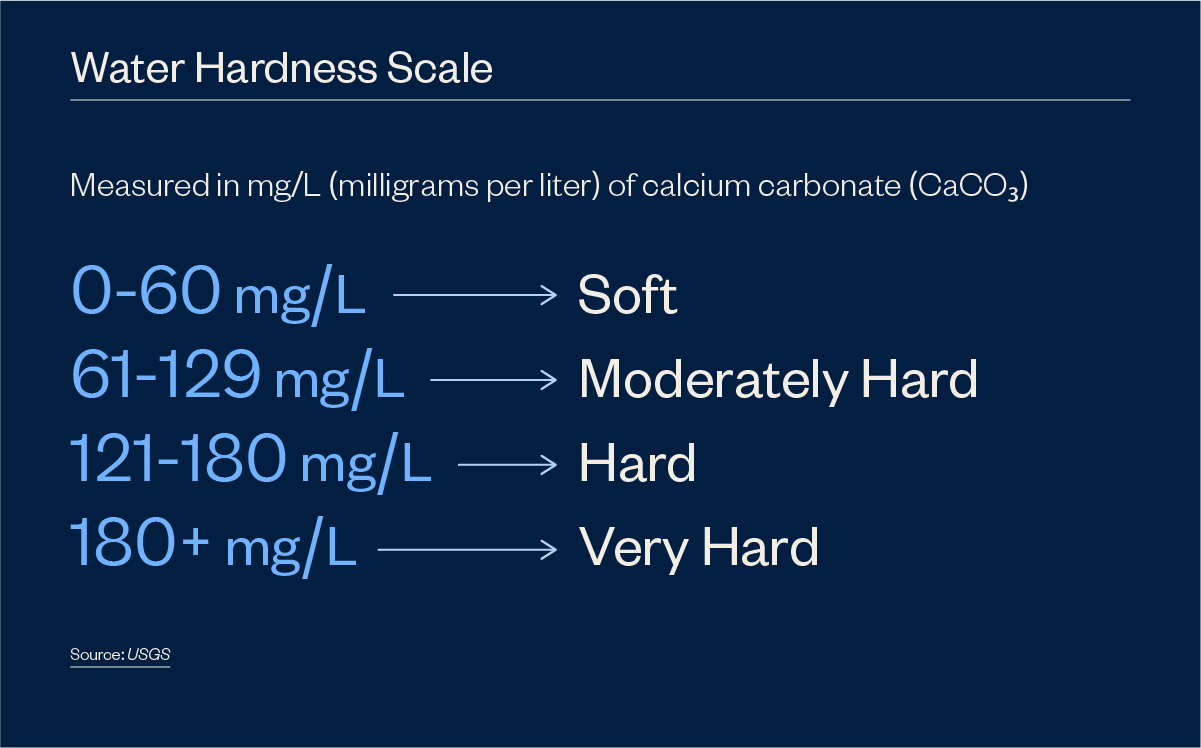
Soft water (0–60 PPM or 0–3.5 GPG) contains very low levels of minerals. It’s gentle on skin, clothing, and appliances, and it won’t leave behind residue or buildup. Many homeowners prefer soft water for its cleaning efficiency and mild feel.
Moderately hard water (61–120 PPM or 3.5–7 GPG) may start to show subtle signs of mineral content, such as reduced soap lather or faint spots on dishes. However, it’s usually not enough to cause damage or require treatment. Most households in this range don’t experience major problems.
Hard water (121–180 PPM or 7–10.5 GPG) is more likely to cause visible scale deposits and mineral stains. Over time, this level of hardness can wear down plumbing and reduce appliance efficiency. It’s also common to see more soap usage and dull laundry results.
Very hard water (181–250 PPM or 10.5–14.5 GPG) can lead to significant buildup in pipes, faucets, and water heaters. You’ll likely notice soap scum in showers and sinks, as well as stiff laundry and dry skin. Homes in this range often benefit from installing a water softener.
Extremely hard water (over 250 PPM or above 14.5 GPG) contains a high concentration of minerals and typically causes ongoing issues throughout the home. This level of hardness can shorten the lifespan of appliances and clog plumbing if left untreated. For households with extremely hard water, treatment is highly recommended.
State-by-State Water Hardness Chart
Below is a summary of the average water hardness levels across all 50 U.S. states. Values are approximate, based on regional geology and water authority reports. Exact measurements may vary by local utility or well. Curious which cities top the list? Check out our full breakdown of the cities with the hardest water.
| State | PPM (mg/L) | GPG | Classification |
| Alabama | 120–180 | 7.0–10.5 | Moderately Hard–Hard |
| Arizona | 200–350+ | 11.7–20+ | Hard–Very Hard |
| California | 100–300 | 5.8–17.5 | Moderately Hard–Very Hard |
| Colorado | 120–250 | 7.0–14.5 | Moderately Hard–Hard |
| Connecticut | 30–120 | 2.0–7.0 | Soft–Moderately Hard |
| Delaware | 60–180 | 3.5–10.5 | Soft–Hard |
| Florida | 100–300 | 5.8–17.5 | Moderately Hard–Very Hard |
| Georgia | 80–180 | 4.7–10.5 | Slightly Hard–Hard |
| Hawaii | 20–100 | 1.2–5.8 | Soft–Moderately Hard |
| Idaho | 20–180 | 1.2–10.5 | Soft–Hard |
| Illinois | 60–180 | 3.5–10.5 | Soft–Hard |
| Indiana | 150–350 | 8.8–20+ | Hard–Very Hard |
| Iowa | 80–180 | 4.7–10.5 | Slightly Hard–Hard |
| Kansas | 150–350+ | 8.8–20+ | Hard–Very Hard |
| Kentucky | 100–180 | 5.8–10.5 | Moderately Hard–Hard |
| Louisiana | 100–180 | 5.8–10.5 | Moderately Hard–Hard |
| Maine | 20–100 | 1.2–5.8 | Soft–Moderately Hard |
| Maryland | 60–180 | 3.5–10.5 | Soft–Hard |
| Massachusetts | 30–120 | 2.0–7.0 | Soft–Moderately Hard |
| Michigan | 60–180 | 3.5–10.5 | Soft–Hard |
| Minnesota | 150–300 | 8.8–17.5 | Hard–Very Hard |
| Mississippi | 80–150 | 4.7–8.8 | Slightly Hard–Hard |
| Missouri | 100–300+ | 5.8–17.5+ | Moderately Hard–Very Hard |
| Montana | 40–150 | 2.3–8.8 | Soft–Hard |
| Nebraska | 120–300 | 7.0–17.5 | Moderately Hard–Very Hard |
| Nevada | 200–350+ | 11.7–20+ | Hard–Very Hard |
| New Hampshire | 20–100 | 1.2–5.8 | Soft–Moderately Hard |
| New Jersey | 50–150 | 2.9–8.8 | Slightly Hard–Hard |
| New Mexico | 150–350+ | 8.8–20+ | Hard–Very Hard |
| New York | 30–120 | 2.0–7.0 | Soft–Moderately Hard |
| North Carolina | 60–180 | 3.5–10.5 | Soft–Hard |
| North Dakota | 80–180 | 4.7–10.5 | Slightly Hard–Hard |
| Ohio | 80–180 | 4.7–10.5 | Slightly Hard–Hard |
| Oklahoma | 120–300 | 7.0–17.5 | Moderately Hard–Very Hard |
| Oregon | 20–120 | 1.2–7.0 | Soft–Moderately Hard |
| Pennsylvania | 60–180 | 3.5–10.5 | Soft–Hard |
| Rhode Island | 30–120 | 2.0–7.0 | Soft–Moderately Hard |
| South Carolina | 80–180 | 4.7–10.5 | Slightly Hard–Hard |
| South Dakota | 100–200 | 5.8–11.7 | Moderately Hard–Hard |
| Tennessee | 80–180 | 4.7–10.5 | Slightly Hard–Hard |
| Texas | 150–350+ | 8.8–20+ | Hard–Very Hard |
| Utah | 200–350+ | 11.7–20+ | Hard–Very Hard |
| Vermont | 20–120 | 1.2–7.0 | Soft–Moderately Hard |
| Virginia | 60–180 | 3.5–10.5 | Soft–Hard |
| Washington | 20–120 | 1.2–7.0 | Soft–Moderately Hard |
| West Virginia | 80–180 | 4.7–10.5 | Slightly Hard–Hard |
| Wisconsin | 80–200 | 4.7–11.7 | Slightly Hard–Hard |
| Wyoming | 120–300 | 7.0–17.5 | Moderately Hard–Very Hard |
Data compiled from USGS and water quality education sources.
Top 5 States with the Hardest Water
These states consistently report the highest average hardness levels:
- Arizona (200–350+ PPM / 11.7–20+ GPG)
- Nevada (200–350+ PPM / 11.7–20+ GPG)
- Texas (150–350+ PPM / 8.8–20+ GPG)
- New Mexico (150–350+ PPM / 8.8–20+ GPG)
- Indiana (150–350 PPM / 8.8–20 GPG)
Top 5 States with the Softest Water
These states are known for naturally softer water ranges:
- Hawaii (20–100 PPM / 1.2–5.8 GPG)
- Maine (20–100 PPM / 1.2–5.8 GPG)
- New Hampshire (20–100 PPM / 1.2–5.8 GPG)
- Vermont (20–120 PPM / 1.2–7.0 GPG)
- Washington (20–120 PPM / 1.2–7.0 GPG)
Testing and Treating Hard Water
If you suspect your home has hard water, the first step is confirming it. Fortunately, testing is simple and affordable. Once you know your levels, you can choose the best solution to treat it.
Testing Methods
There are a few reliable ways to check your water hardness:
- Home test kits are easy to find online or at hardware stores. These kits usually include strips or droppers that react to the minerals in your water, giving you a quick readout in GPG or PPM.
- Local water authorities can often provide a water quality report for your area. If your home uses municipal water, this is a good place to start for general water hardness data.
- For personalized results, Leaf Home offers a FREE water test to help homeowners understand their specific water challenges. This test is performed by a trained technician and includes recommendations tailored to your home.
Treatment Options
Once you’ve confirmed hard water, there are several proven ways to treat it:
- Ion-exchange water softeners are the most common and effective solution. These systems replace calcium and magnesium ions with sodium or potassium, softening the water throughout your entire home.
- Salt-free water conditioners use a different process to help reduce scaling without adding sodium. These are ideal for households looking for low-maintenance or environmentally friendly options.
- Reverse osmosis systems push water through a semipermeable membrane to help remove minerals and other contaminants. These are typically installed at a single point of use, like a kitchen sink.
- Advanced filtration systems combine multiple methods to target both hardness and other impurities, providing a customized approach for households with complex water issues.
Treating hard water protects your plumbing, improves cleaning performance, and helps your home run more efficiently. It’s one of the smartest upgrades you can make, especially if you live in a region with high mineral content. Not sure what system is right for your home? Start with our guide on choosing the right size water softener.
Know Your Numbers, Protect Your Home
Hard water is common across the U.S., but that doesn’t mean you have to live with the effects. Understanding water hardness by state, how it is measured in GPG and PPM, and where your home falls on the water hardness chart can help you take control of your water quality. With options like ion exchange softeners and reverse osmosis systems, Leaf Home makes it easy to test your water and choose the right treatment for your household. Learn more about the best solutions for treating hard water, from ion-exchange systems to whole-home filters.
FAQs
Hard water contains high levels of dissolved minerals, especially calcium and magnesium. Soft water has low mineral content, making it gentler on plumbing, skin, and appliances. You’ll often notice more lather with soap and fewer deposits on surfaces when using soft water.
Yes, hard water is safe to drink. In fact, the minerals it contains can contribute to your daily calcium and magnesium intake. However, it may have a slightly bitter taste and can cause scale buildup in appliances and pipes over time.
You can test your water using an at-home test kit, check with your local water utility, or schedule a free professional test from Leaf Home. These options will give you results in GPG or PPM, which help determine the right solution for your home.
Over time, hard water can lead to scale buildup, reduced appliance efficiency, increased energy costs, and shortened lifespans for water-using systems. It can also result in higher usage of soap and detergent due to reduced effectiveness.
Yes. Hard water can leave a mineral film on your skin and hair, leading to dryness, irritation, and buildup. People with sensitive skin or eczema may notice worsening symptoms. It can also make your hair feel dull or heavy and reduce the softness of washed fabrics.