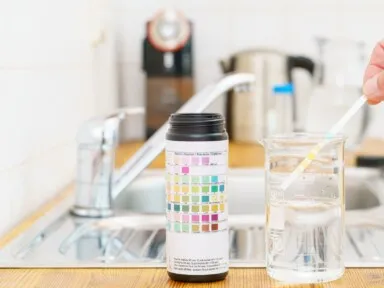
When it comes to water quality, homeowners typically think about contaminants but may not always be paying attention to their drinking water pH. Although we hear about it frequently for things like pool maintenance, it is also essential for our home and health to understand pH balance. pH tells us how acidic or basic/alkaline water is on a scale of 0 to 14. These levels can affect how water tastes, its pipe corrosion potential, and the effectiveness of water treatment plans.
In This Article
- What is pH and Why Does It Matter for Drinking Water?
- Why Balanced pH is Important
- Factors Affecting Water pH
- How to Test Your Water’s pH
- Methods to Adjust and Improve Water pH
- Balancing Your Home’s Water pH for Health and Appliance Longevity
- Frequently Asked Questions
What is pH and Why Does It Matter for Drinking Water?
Although pH is a measurement of acidity, what is measured are the free hydrogen and hydroxyl ions. How these ions are balanced in something like water tells us how acidic or alkaline that liquid is. More hydrogen ions is acidic, and more hydroxyl ions is alkaline (or “basic”). Alkaline water is also considered hard water because of the high volume of mineral content.
Per the U.S. Environmental Protection Agency (EPA), on the 0 to 14 pH scale:
- 0-6 is acidic
- 7 is neutral
- 8-14 is alkaline
The EPA regulates fresh drinking water to have a pH value between 6.5 and 9 due to the fact that pH affects the solubility and bioavailability of metals and other contaminants. A pH within the EPA’s range limits the levels of contaminants and the risk to human health, while also preventing pipe corrosion.
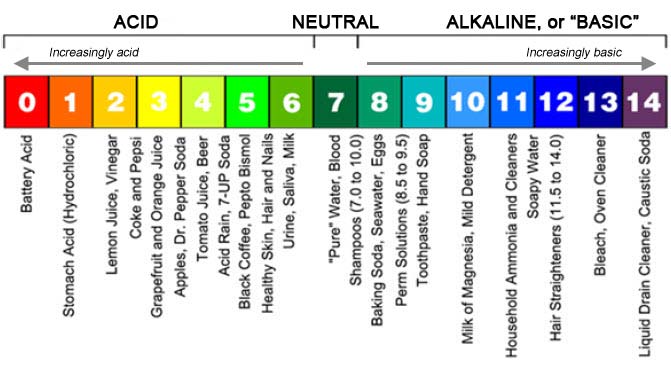
Image Source: EPA
Why Balanced pH is Important
Balanced pH in drinking water keeps it palatable while also helping to protect your pipes and appliances from corrosion or deposit buildup. Beyond protecting your health, balanced pH preserves your plumbing, appliances, plants, and aquariums.
In addition to potentially posing a health issue, high or low pH levels can cause numerous problems in your home as well. A high pH can create mineral deposits on your pipes and make common water disinfectants like chlorine less effective. A low pH can corrode metal pipes and leach harmful metals into your water supply. That’s why it is crucial for your health and that of your home’s plumbing and water-based appliances to maintain a more neutral water pH level.
Potential Risks of Imbalanced Water pH
Both extreme ends of the water pH spectrum come with their issues. Whether your water is too acidic or too alkaline, there are risks to your overall health and that of your home.
| Too Acidic | Too Alkaline |
|
|
Is Alkaline Water Better For You?
While some argue that alkaline water has health benefits, that isn’t often the case. Although high pH water can sometimes temporarily relieve issues like heartburn because it neutralizes the acids, it will taste bitter. It can cause a person’s blood pH to increase, which can cause problems for individuals with kidney disease, according to Harvard Health.
Factors Affecting Water pH
Since pH is a natural process, many things in nature can cause the levels to change. Geology and the ground substrate (layers), like limestone, can cause a change in this balance since limestone is high in calcium carbonate. At the same time, areas with volcanic rock will likely have lower pH since the soil is highly acidic.
Human activities can also interfere with these levels. Ground leaching from landfills, agricultural runoff with fertilizers or pesticides, and mining sites, for instance, can also influence pH. Landfill leaching is also known as landfill leachate and changes over time as the landfills decompose. This decomposition can change the pH in groundwater from more acidic to more alkaline.
How to Test Your Water’s pH
There are several ways to test your home’s water for pH levels. Many of these options you can do yourself, but you can also hire experts to do a more comprehensive test for you. With the guidance of a professional, you can also evaluate ways to adjust your water’s pH as needed.
- pH paper test strips: These paper test strips, when dipped into water, will change color depending on the level of pH present.
- Digital meters: Using electrodes, these pH meters measure pH by utilizing electricity to measure the pH level and are more accurate.
- Professional lab tests: Tests conducted by experts in a lab using a water sample from your home. Schedule a free water test with Leaf Home
Methods to Adjust and Improve Water pH
There are several reasons why your home’s pH may be off balance, but there are also plenty of ways to readjust it. Many water treatment methods are known for their efficacy with pH, whether you need to lower or raise it to get back to that neutral territory advised by the EPA.
- Reverse osmosis: Arguably the most effective water treatment method for filtering many water contaminants. RO can produce water with a lower pH, often slightly acidic, because it removes alkaline minerals that help buffer acidity. If you prefer the taste of a more alkaline water, you can add a remineralization filter.
- Neutralizing filters: These filters are necessary for water that is too acidic. The calcium or magnesium filters raise the pH level of water as it passes through. These filters usually need to be replaced every 1-3 years.
When working with one of these methods to balance water pH, it is essential to test before and after the treatment is applied. This will indicate whether you need to continue treatment or stop. You should also always use protective equipment when working with chemicals.
Balancing Your Home’s Water pH for Health and Appliance Longevity
For homeowners, particularly those with well water, it is vital to test your drinking water for pH levels at least once a year, according to the CDC. Doing so protects your health and your home’s plumbing. Low pH can cause corrosion in pipes, while high pH can cause scale buildup that shortens the lifespan of appliances.
Aim to keep your water between 6.5 and 9 on the pH scale. Whether you test the water using test strips, a digital meter, or through a professional water testing service, have a plan in place to adjust the pH as needed. Maintaining a balanced pH means cleaner-tasting water, healthier plumbing, and appliances that last longer.
Frequently Asked Questions
What is the optimal pH range for household water?
The EPA suggests the ideal range to be between 6.5 and 9. This neutral pH range keeps the water tasting better and working more effectively in your home’s pipes, while also limiting the risk of harmful contaminants.
How often should I test my water’s pH?
You should test your home’s water at least once a year, or more often if you use well water, as it is not regulated or tested by the local utility company. You may also want to test your well water if there is heavy rain, runoff from local farms, the water tastes metallic, or you’re suddenly having skin issues.
Can I adjust water pH without professional help?
Yes. For minor adjustments, you can use pitcher filters, reverse osmosis systems, or neutralizing filters. For major pH issues, especially with well water, it’s best to have a professional install a whole-house water filtration system for safe and effective treatment.
Will adjusting my water’s pH affect mineral content?
Yes. If you lower the pH, certain minerals like calcium dissolve more effectively (helping prevent buildup in your pipes). In contrast, raising pH can increase the amount of undissolved minerals (which can cling to your pipes).
Is 9.5 water better for you?
According to Harvard Health, there is no evidence to suggest that high alkaline water has any substantial health effects that make it better for you to drink.