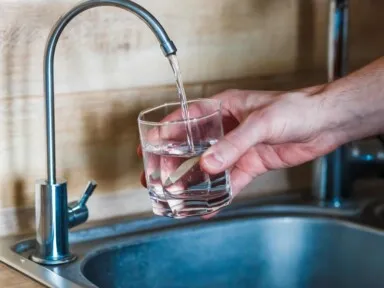
Chlorine helps protect against microbes, but it can be one of the things standing between you and delicious-tasting water. Residual amounts of chlorine (and other disinfectants, like chloramine) in water carry their own set of risks and setbacks. From unpleasant bleach-like odors to health concerns, chlorine and chloramine can react with organic matter in water to form disinfection byproducts (DBPs). Utilities are required to keep DBPs within EPA limits, but residual disinfectant at the tap can still have unpleasant effects.
Even maximum chlorine levels considered safe by EPA standards (4 mg/L) can impact your water’s taste and smell, and reduce the lifespan of your appliances. Since chlorine is no longer necessary once water reaches your tap, many households turn to chlorine removal solutions to help improve water quality, protect their plumbing, avoid health risks, and prevent dry hair or irritated skin.
In this guide, we’ll discuss what chlorine is, why it’s used, and practical removal methods ranging from DIY approaches to whole-house systems, helping you identify the best water solution for your needs and budget for safer, better-tasting water.
In This Article
- What Is Chlorine and Why Is It Added to Water?
- Potential Impacts of Chlorine in Drinking Water
- Should You Remove Chlorine From Water?
- Common Methods to Remove Chlorine (and Chloramine)
- Choosing the Best Dechlorination Method for Your Home
- Next Steps for Cleaner, Lower-Chlorine Water
- Frequently Asked Questions
What Is Chlorine and Why Is It Added to Water?
You probably know chlorine from swimming pools and household cleaners, but it’s also an unsung hero of drinking water. Municipal water treatment facilities add chlorine to kill harmful microbes and prevent waterborne illnesses. This practice has virtually eliminated diseases like cholera, Giardia, and typhoid in the United States. Since most tap water travels miles through aging pipes from underground sources, it’s vulnerable to picking up dangerous contaminants such as E. coli along the way. Chlorine acts as a protective shield throughout the journey, so that when you turn on your tap, the water is safer to drink. The chemical is fairly stable and considered safe for consumption at regulated levels, so it remains in your water unless actively removed.
Chlorine vs. Chloramine
Some municipalities use chloramine because it’s more stable and offers more long-term protection than chlorine. Chlorine is a chemical element (a highly reactive halogen gas), while chloramine is a chemical compound formed by combining chlorine with another substance, usually ammonia. We’ll compare chlorine vs. chloramine so you can understand how they affect your water quality and solutions.
Chlorine
- What it is: An element (Cl)
- Taste/odor: Can leave a bleach-like taste or smell.
- Behavior: Less stable than chloramine; dissipates/off-gasses from standing water.
- Removal: Efficiently reduced by activated carbon (look for NSF/ANSI 42).
- Regulatory limit: EPA Maximum Residual Disinfectant Level (MRDL) = 4 mg/L as Cl₂
Chloramine
- What it is: A family of compounds (most commonly monochloramine) made from chlorine + ammonia.
- Taste/odor: Often less noticeable than chlorine, though some describe a medicinal taste.
- Behavior: More stable; does not off-gas like chlorine and persists farther through the system.
- Removal: Harder to treat with standard carbon; typically requires catalytic carbon and longer contact time (larger tanks/slower flow). Chemical neutralizers can reduce chloramine, but they introduce sulfites—not a typical whole-home solution.
- Regulatory limit: EPA MRDL = 4 mg/L as Cl₂.
These chemicals may have a lot in common, but when it comes to removal, they require different techniques. In this guide, we’ll explore the different methods for removing chlorine and chloramine. To pick the right filter, first confirm which chemical your city uses by checking your local Consumer Confidence Report (CCR) here.
What are safe levels of chlorine in drinking water?
The levels of chlorine in your water are safely regulated to remain below 4 mg/L, but actual levels at the tap vary by your public water system and are typically below that limit. However, even chlorine levels considered safe can create unwanted tastes or smells, and can form byproducts with potential health concerns.
To determine the chlorine levels in your water, read your local water quality report (CCR), which is an annual report that explains the source of water in your municipality and what it contains. If using the EPA’s online CCR tool, you can look at disinfectant types (chlorine, chloramine), residuals, and DBPs. By better understanding what’s in your water, you can decide which treatment methods are most suitable for your household.
Potential Impacts of Chlorine in Drinking Water
Drinking water that contains safe levels of chlorine can have unwanted impacts on taste and odor, the formation of byproducts, and on plumbing or appliances.
Taste and Odor
Many people describe chlorine’s odor or taste as bleach-like or pool-like.
Byproducts
During water treatment, chlorine effectively eliminates harmful microbes and pathogens by reacting with natural organic matter. This same reaction can produce disinfection byproducts (DBPs) such as trihalomethanes (THMs) and haloacetic acids (HAA5). These are regulated at the system level and utilities are required to keep them below EPA limits.
However, multiple studies have linked elevated, long-term exposure to DPBs with increased health risks (such as bladder cancer), though this risk is significantly lower than the risk of waterborne illnesses from untreated water. Still, understanding these byproducts and their effects can help you minimize long-term health risks.
Effects on Plumbing and Appliances
The chemical’s presence can gradually break down rubber seals, damage water heater elements, and lead to premature wear on dishwashers and washing machines, meaning you’ll have to replace them sooner.
Because chloramine is stable and stays in water longer, chloramine-treated water can cause corrosion of certain pipes, and lead to metals such as lead and copper leaching into the water supply. Lead leaching can be concerning, as its effects pose serious health risks, including developmental issues in children. Copper, while not as severe, can give water a metallic taste and, at high levels, cause digestive issues.
While some of these impacts can have serious health concerns, others come down to preference.
Should You Remove Chlorine From Water?
Once water reaches your faucet, the chlorine has done its job of keeping water safe from harmful microbes and is no longer necessary. Removing or reducing chlorine (or chloramine) can dramatically improve the taste and smell of your water, eliminating that unpleasant bleach flavor that many people find off-putting. Beyond taste improvements, chlorine removal helps reduce DPBs, and prolong the life of appliances.
Common Methods to Remove Chlorine (and Chloramine)
Once you understand chlorine and chloramine and their effects, you may choose to explore removal or dechlorination of your water. We’ll explore several methods from filters to DIY to chemical neutralizers, and help you decide which matches your budget, water volume, and the maintenance needs of your household.
Activated Carbon Filters
Activated carbon filters are one of the most effective ways to remove chlorine from water by reducing the chemical by 90-99%. Popular ways to use carbon filters are pitchers, connecting to a faucet, under the sink, or a whole-house water filtration system. Carbon absorption works by sending chlorinated water through a carbon membrane that traps chlorine molecules on its surface.
To verify the effectiveness of an active carbon filter, refer to the NSF (National Science Foundation) label on the product’s label or description. An NSF/ANSI 42 means a filter has been tested and verified to improve taste and odor by reducing chlorine. Many companies may issue vague, misleading claims such as “NSF tested.” For the most accurate information, visit the NSF.org website and search their database to confirm specific claims.
Catalytic Carbon (for chloramine)
Catalytic activated carbon (CAC) is carbon treated to be more advanced and effective than standard carbon. The Water Quality Association (WQA) and municipal authorities recommend catalytic carbon plus longer contact times for the most reliable chloramine removal.
Chloramine is much more stable than chlorine, and small POU (point of use) filters, such as faucet cartridges, don’t provide enough contact time for chloramine to be removed. In whole-house filtration systems, water passes through large carbon tanks to ensure enough exposure to help remove chlorine effectively.
Reverse Osmosis
Reverse osmosis is another popular water filtration option for the home. Often installed under the sink for drinking and cooking needs, these systems are not typically designed for whole-home use. They produce purified water and remove 99% of dissolved salts, metals, and other fine impurities while improving the taste and smell of water.
To remove chlorine with a reverse osmosis filter, a multi-stage system with a carbon pre-filter is necessary to filter out the disinfectant and protect the reverse osmosis membrane. Some potential trade-offs of this system are that it’s only ideal for smaller volumes of water and can also remove some beneficial minerals such as magnesium and calcium, though these can easily be added back in with a remineralizer.
Boiling and Letting Water Stand
For those looking for a DIY approach, boiling water or letting it sit can remove chlorine from drinking water. Keep in mind, these methods only work for chlorine because it can evaporate as a gas, unlike chloramine, which is more stable.
Boiling Method
Bring water to a boil for at least 15 minutes, allowing the chlorine time to evaporate. The water must then cool to room temperature before it’s safe or comfortable to drink, making this a slow process for immediate water needs, especially on hot days.
Letting Water Stand
Leaving water uncovered at room temperature allows chlorine to naturally evaporate. This method may sound simple, but it takes 24 hours or longer to be effective.
Both approaches work for small quantities of water, but scaling them for households with higher consumption or multiple family members can be difficult. For larger water volumes, a dedicated filtration system may be more efficient for time and convenience.
Distillation (small volumes)
Distillation works by boiling water to create steam, then cooling that steam back into a liquid. This method can reduce chlorine, but it’s not the most effective since chlorine can turn into vapor before the water does, which causes it to end up right back in your “purified” water. The distillation process takes even longer than boiling, won’t reduce chloramine, and is also only suitable for small batches.
Chemical Neutralizers
Chemical dechlorination works by neutralizing the chemicals with Campden tablets or vitamin C and is particularly effective for chloramine. They’re handy for small volumes or spot uses, but they’re not typical whole-home solutions.
UV and Advanced Oxidation Processes (AOP)
UV Light
UV light can remove chlorine through photochemical reactions that break down chlorine molecules, and the wavelengths for chlorine removal range from 180 to 200 nanometers. UV filtration isn’t commonly used for home chlorine removal because it breaks down contaminants instead of removing them. While UV light can be effective for neutralizing harmful bacteria and viruses in industrial water, it’s not the most practical for household dechlorination use.
AOP
AOPs use powerful hydroxyl radicals to break down tough pollutants such as pesticides, pharmaceuticals, and dyes, turning them into harmless byproducts such as carbon dioxide and water. AOPs are not used in homes because they require expensive, specialized equipment and are mostly found in municipal or industrial wastewater treatment.
| Method | Effective For | Notes |
| Activated Carbon | Chlorine (not chloramine) | Helps remove 90–99% chlorine; NSF/ANSI 42 covers taste & odor. Limited for chloramine. |
| Catalytic Carbon | Chlorine & Chloramine | Enhanced reactivity; helps remove both but needs longer contact time (whole-house POE systems work best). Recommended by WQA & municipal authorities for reliable chloramine removal. |
| Reverse Osmosis (with carbon) | Both (via pre-filter) | Carbon stage helps remove chlorine/chloramine before RO membrane; limited volume; removes beneficial minerals unless a remineralization filter is added. |
| Boiling / Letting Stand | Chlorine only | Chlorine evaporates (15+ min boiling or 24+ hrs standing). Chloramine is much more stable and persists. |
| Distillation | Chlorine (partially) | Slow, small volumes, not effective for chloramine. |
| Chemical Neutralizers | Chlorine & Chloramine | Includes sulfite-based Campden tablets and Vitamin C. Provide fast, effective neutralization but require dosing and storage space. |
| UV | Limited chlorine breakdown | Mainly for microbes; not practical for household chlorine/chloramine removal. |
| Advanced Oxidation (AOP) | Industrial pollutants | Breaks down organics (e.g., pesticides); not used in homes. |
Choosing the Best Dechlorination Method for Your Home
Once you’ve identified whether you’re dealing with chlorine or chloramine, choosing the right dechlorination method comes down to three key factors: your home’s water quality, your budget, and how much space you have for equipment. For basic cooking and drinking needs, an under-sink filter certified to NSF/ANSI 42 standards will do the job. Need serious contaminant removal? A multi-stage reverse osmosis system delivers thorough filtration that handles broader containment control.
If you’re planning to address chlorine throughout your entire home, a POE carbon tank provides whole-house treatment, protecting everything from your morning shower to your washing machine. If your water contains chloramines, you’ll need the upgraded power of catalytic carbon to remove them effectively.
Next Steps for Cleaner, Lower-Chlorine Water
The best way to know exactly what’s in your water is to test it first. Once you find out what chemicals you’re dealing with, whether it’s chlorine or chloramine or any other unwanted contaminants, you can take the next steps for cleaner water. We recommended free in-home water testing with our Leaf Home water experts to get accurate results. From there, we consider your water goals and implement the dechlorination method that fits your household’s needs and gives you the cleaner, safer, better-tasting water you deserve.
Frequently Asked Questions
How do I know if my tap water has chlorine?
If you notice a “pool-like” smell or the smell of bleach, you may have chlorine in your drinking water. To confirm, start by checking your annual CCR. This report will indicate whether chlorine or chloramine is used in your utility’s water and the average levels present.
For a detailed breakdown of exactly what’s in your water, Leaf Home Water Solutions offers a digital testing system that identifies chlorine levels, as well as heavy metals like iron and copper, hardness, and more for a precise understanding of your water quality.
Will removing chlorine affect other water treatment goals?
Yes, depending on your water treatment goals, removing chlorine can affect your plan. While methods such as activated carbon or vitamin C filters remove chlorine, they won’t remove sediment, hard water minerals, or microbes. In a comprehensive water treatment plan tailored to address your household’s needs, chlorine removal methods can be paired or stacked with additional filtration, such as sediment filters, water softeners, or reverse osmosis, to address multiple concerns at once and achieve higher overall water quality.
Does bottled water have chlorine?
No, bottled water does not have chlorine in it because bottlers use industrial water treatment methods such as UV light, advanced oxidation, and reverse osmosis to remove any contaminants, pollutants, or microbes. They remove chlorine to improve taste and smell, as it’s no longer needed to protect water once it’s been bottled.
Do shower filters remove chlorine/chloramine?
Yes, shower filters can be highly effective for removing chlorine. Chloramines can be more difficult to remove, and shower filters must be specifically designed with media such as catalytic carbon or vitamin C. Many people choose these filters to reduce skin dryness, hair damage, and skin irritation caused by chemicals in tap water.
How do I verify a filter works for chlorine?
Your water tasting and smelling better is usually a good indicator that a filter is working, but it’s best to make sure. The easiest way to confirm is to check for an NSF/ANSI 42 marking, which guarantees a filter has been tested for chlorine removal and taste improvement. For the most clarity, take a sample of water before and after filtration and use a home testing kit on both, then compare the results.