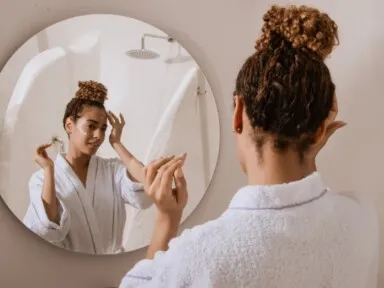
You’ve got the wellness routine down. Morning walk. Greens in the blender. Eight hours of sleep. A skincare lineup that took three months to figure out. You’re doing the work.
But there’s one thing most people never think to check. The water that runs through your pipes every single day: the water you drink, shower in, and wash your face with. August is National Wellness Month, which makes it a good moment to pause and ask: what’s actually in my water?
We’re here to close a gap that most wellness conversations skip entirely. Once you understand how water quality affects your skin, hair, and hydration, you can’t unsee it.
What Is Hard Water, and How Does It Affect Your Body?
Hard water contains high levels of dissolved calcium and magnesium minerals. It’s typically safe to drink, but generally safe to drink doesn’t mean harmless to everything else.
According to the U.S. Geological Survey, water with mineral levels between 121 and 180 milligrams per liter (mg/L), or 7 to 10.5 grains per gallon (gpg), is classified as hard water, and anything above that is very hard.
Think of hard water like washing your face with sand. It may not leave a mark right away. But do it every day, and your skin will let you know.
When hard water mixes with your soap or cleanser, it forms a filmy residue that doesn’t rinse away cleanly. That residue sits on your skin. It clogs pores. It strips your skin’s natural oils and disrupts its moisture barrier, the protective layer your skin relies on to stay hydrated and resilient. According to research from the UK Biobank cohort, regions with higher hard water levels show a higher prevalence of eczema. That suggests a real effect of mineral-heavy water on skin over time.
Chlorine is another piece in the puzzle. Most municipal water in the U.S. is treated with chlorine to kill bacteria, which is good. But chlorine has another effect once it reaches your showerhead. It keeps drying. Your skin. Your scalp. Your hair. Every shower is a small exposure that adds up over time.
Together, hard water minerals and chlorine can work against your skin, hair, and nails, no matter how good your products are.
How Does Water Quality Affect Skin and Hair Specifically?
Better water quality supports skin and hair by removing the mineral residue and chlorine that disrupt your body’s natural defenses. Here’s what that looks like across your daily wellnees routine.
Showering. Softened water rinses cleaner. It’s that simple. Without mineral residue clinging to your skin, you step out feeling less tight, less dry, and less like you need to slather on moisturizer to undo the damage. Your skin barrier stays more intact, which means it can actually do its job.
Skincare. Your cleanser, your toner, your serum: they’re all formulated to absorb into clean skin. Hard water leaves a mineral film that gets in the way. When that film is gone, products penetrate better. You get more from the same skin routine. Check out the 2026 guide to a better glow with better water if you want to go deeper on skin science.
Hair. Shampoo and conditioner need to rinse thoroughly to clean properly. With hard water, they don’t. Mineral buildup stays on your strands, leaving your hair dull, heavy, and prone to breakage. Soft water lets your products rinse clean, which means less buildup and more shine.
Does Water Quality Affect Hydration?
Yes, water quality directly affects your hydration. If your tap water has a flat, chlorine-forward flavor, you’re less likely to reach for it. That means you drink less water without thinking about it.
Filtered water helps reduce the contaminants and chemicals that affect taste and smell. When water actually tastes good, hitting your daily intake goal gets easier. The benefits of filtered water show up not just in how it tastes, but in how consistently you drink it. Better taste leads to better habits. That’s the whole chain.
A Simple Wellness Habit Stack That Starts at the Tap
You don’t need to build a new wellness routine from scratch. You need a foundation that stops working against you.
Here’s what a wellness routine with quality water looks like in practice:
- Drink more filtered water. Fill a bottle you’ll actually use. Put it somewhere visible: your desk, your counter, your gym bag. Good-tasting water makes drinking enough feel effortless, not like a chore.
- Be more intentional in the shower. Lukewarm water. A gentle cleanser. Less time, less stripping. Knowing your water is doing less damage makes this feel less like maintenance and more like self-care.
- Let your skincare do its job. Stop compensating for what your water is undoing. Hard water creates a barrier your serums and moisturizers must fight through. Better water means the products you already own can perform the way they were designed to.
- Get your water tested. You can’t fix something you aren’t aware of. Most people skip this step. Start here. It takes less time than you think, and the answers change everything.
Small shifts. Real difference. That’s the whole idea.
What Are the Benefits of Whole-Home Water Filtration for Wellness?
A whole-home water filtration system treats water at the point it enters your house. So, every tap, your shower, your kitchen sink, your washing machine, delivers cleaner water. The wellness benefits are immediate and cumulative.
- Better hydration. Cleaner water tastes better, so you drink more of it.
- Healthier skin and hair. Without harsh minerals and chlorine, your skin stays softer, and your hair is less brittle.
- Fewer chemicals on your body. Filtered shower water means less chlorine absorbed through your skin every single day.
- Cleaner dishes and laundry. Soft, filtered water works harder, so your clothes last longer, and your dishes come out spot-free.
- Peace of mind. You stop guessing what’s in your water. You just know it’s cleaner.
Even city water that meets EPA standards can contain chlorine, hard minerals, and other contaminants that affect how your water looks, tastes, and feels on your body. A whole-home water filtration system helps address all of it in one system.
The right solution depends on what’s actually in your water. That’s where testing matters.
The First Step: Know What’s in Your Water
Here’s what most people skip: they assume their water is fine because it looks clear and runs on a municipal system. That assumption has some gaps.
A free in-home water test gives you real answers, not guesses. When a local Leaf Home Water Solutions expert comes to your home, they test chlorine levels, pH, hardness, iron, copper, and more. In about two minutes, you know what is in your water. From there, they’ll recommend the right water solution, whether that’s a whole-home water filtration system, a water softener to tackle hard minerals, or a reverse osmosis system for your drinking water specifically. No guesswork. No generic recommendations. Just a solution matched to your actual water needs.
Learn more about why home water testing matters before you decide.
Your Wellness Habits Deserve Better Water
You’ve built a wellness routine worth protecting. Sleep, movement, food, skincare – it all matters. But if your water is working against you, you’re leaving actual results on the table.
Better water doesn’t replace what you’re doing. It gives it a better chance of enhancing your overall wellness.
Schedule your free in-home water test with Leaf Home Water Solutions and find out exactly what your water is, and isn’t, doing for you.
Frequently Asked Questions
Can hard water make eczema or skin conditions worse?
Yes, studies have shown that regions with higher hard water concentrations show a higher prevalence of eczema. The mineral residue left by hard water disrupts the skin’s moisture barrier, which can trigger or worsen conditions like eczema, acne, and general skin irritation over time.
Is a water softener or a filtration system better for wellness?
It depends on what’s in your water. A water softener is best suited for homes with high calcium and magnesium levels, the minerals that cause hard water. A filtration system is better when the primary concern is chlorine, heavy metals, or other contaminants. Many homes benefit from both. A free in-home water test from Leaf Home Water Solutions will identify what’s in your water and match you to the right solution.
How quickly will I notice a difference after softening or filtering my water?
Most people notice changes in skin feel and hair texture within a few weeks of switching to softened or filtered water. Taste improvements are immediate. Long-term benefits, including better absorption of skincare products and reduced dryness, build over time as the mineral residue that has accumulated on skin, and hair is gradually replaced by cleaner water exposure.