Survey: Stairs and Bathrooms Top the List of Home Safety Concerns – But Most Americans Wait Too Long to Act
Aging in place is a goal we all strive for – staying in the home we love, surrounded by the memories we’ve built. But a new survey of 600 Americans reveals that while we know where the dangers are, we often wait too long to fix them.
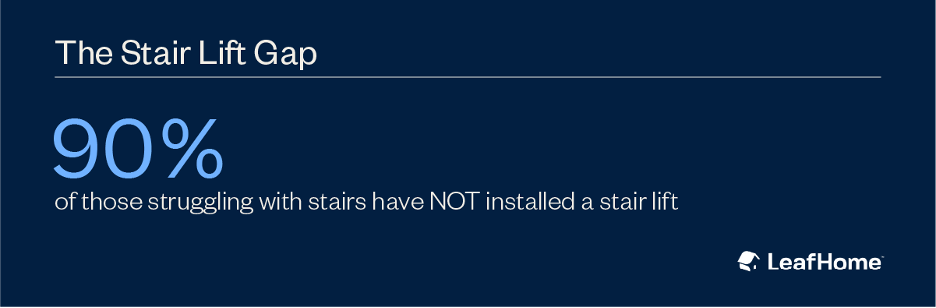
The data paints a clear picture: Stairs are the number one home safety concern for Americans who want to age in place. Yet, 90% of those already struggling with stairs still haven’t installed a stair lift.
There is a monumental gap between recognizing a problem and actually fixing it. 38% of respondents identify stairs as the most unsafe area of their home. That number is nearly double the next concern, the bathroom, which sits at 22%. Yet most people wait. Only 1% of respondents installed a stair lift immediately after beginning to struggle. Most waited four months or longer.
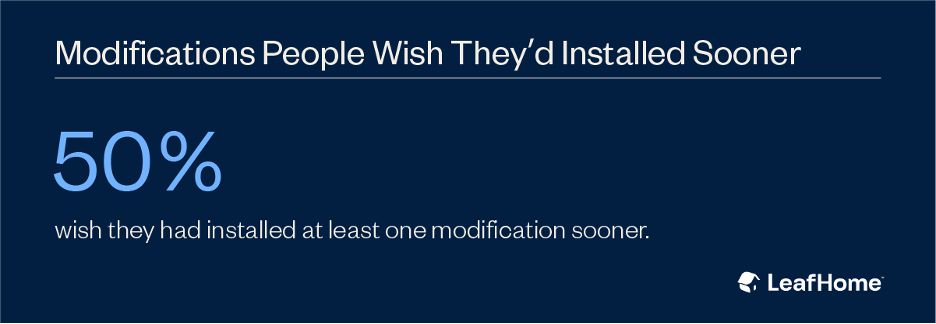
The result? Regret. 50% of all respondents wish they had installed at least one safety modification sooner. And the number one reason for the delay wasn’t money – it was the belief that “I felt I didn’t need them yet.”
This survey exposes a critical gap between awareness and action. Americans overwhelmingly recognize stairs and bathrooms as their biggest risks, but most delay action until after an injury or significant mobility decline.
Stairs Are the #1 Safety Concern
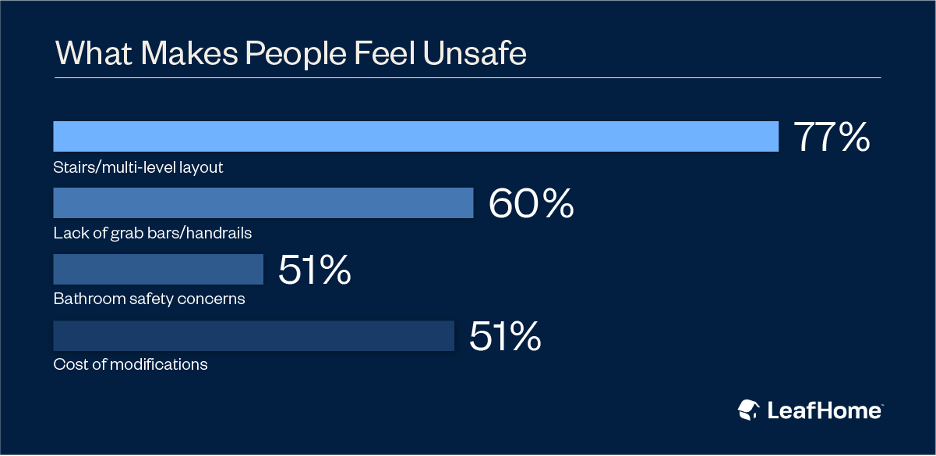
When you look at your home, what area worries you the most? If you answered “the stairs,” you aren’t alone. When asked what factors contribute to you feeling unconfident in your home, stairs top the list:
- 77% cite stairs/multi-level layout
- 60% cite lack of grab bars/handrails
- 51% cite bathroom safety concerns
- 51% cite cost of modifications
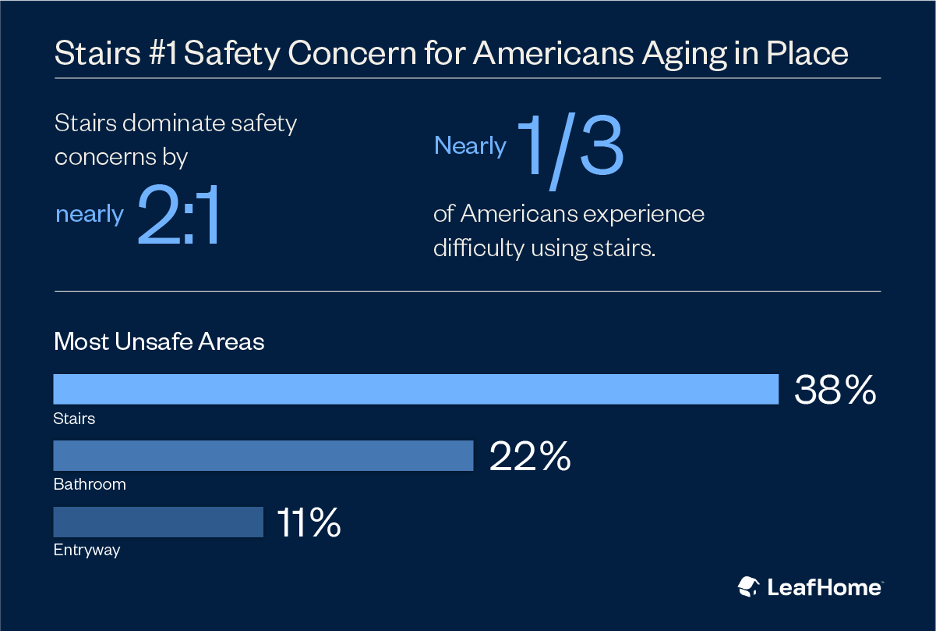
Stairs also topped the list when it came to safety. According to the survey, nearly 4 in 10 respondents named stairs as their top concern. This is nearly double the next highest area, the bathroom, which came in at 22%.
Most Unsafe Areas in the Home:
- Stairs: 38%
- Bathroom: 22%
- Entryway/Outdoors: 11%
- Kitchen: 2%
While the interior staircase is the primary worry, it is worth noting that 11% of respondents identified the entryway or outdoors as a major safety risk. This suggests that for many, an outdoor stair lift or ramp could be just as vital as indoor solutions.
The struggle is already here for many homeowners. Nearly one in three Americans (30%) reports difficulty using their stairs. Even more concerning, 12% have been struggling for more than two years.
Stairs represent a unique intersection of high concern and high incidence. Unlike other areas of the home, stairs are both the most feared and the most actionable safety priority.
The Stair Lift Delay Problem
Stairs are the leading home safety concern for aging in place, yet most people delay addressing the issue for months or even years.
Among Americans who report difficulty using stairs, 90% have not installed a stair lift. For those who eventually do, action rarely happens quickly. This extended gap between recognizing a problem and taking action leaves many individuals continuing to navigate stairs despite ongoing difficulty.
Among respondents who struggled with stairs before installing a lift, nearly 17% reported sustaining an injury prior to installation, including:
- 11% minor injuries (bruises)
- 4% moderate injuries (sprains or muscle tears)
- 2% serious injuries (fractures or hospitalization)
Together, the data points to a clear pattern: stair difficulty is common, solutions are delayed, and injuries often occur before changes are made. If you are wondering how stair lifts work or if one will fit your home, getting that information early is key to avoiding the “delay trap.”
Bathrooms – The Second Danger Zone
While stairs remain the top home safety concern, bathroom safety is a key driver of confidence when it comes to aging in place. Among respondents who feel unconfident about remaining in their current home, 50% cite bathroom safety concerns as a contributing factor.
When asked to name the single most unsafe area of their home, 22% of Americans identified the bathroom, second only to stairs.
Bathrooms are complex spaces. Slick surfaces, high tub walls, and tight spaces create a perfect storm for falls. In fact, 7% of respondents reported falling in the bathroom in the last five years.
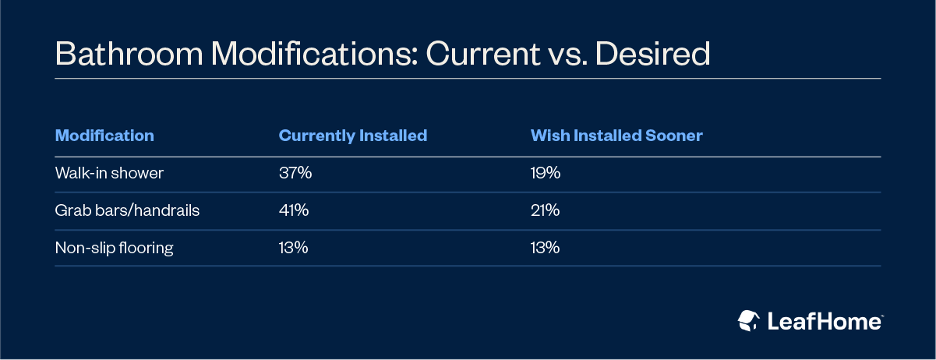
Demand for bathroom remodels is high, but so is the regret about timing. While features like walk-in showers and grab bars are popular, many homeowners wish they had installed them sooner.
Bathroom Modifications: Current vs. Desired
- Grab bars/handrails: 41% currently have them, but 21% wish they had installed them sooner.
- Walk-in shower: 37% currently have one, yet 19% wish they had done it sooner.
- Non-slip flooring: 13% currently have it, and 13% regret not installing it earlier.
This data suggests that demand outpaces action. Homeowners know they need these upgrades, but they often wait until it feels “necessary,” which is often too late.
Why People Wait – And Why They Regret It
If we know stairs and bathrooms are dangerous, what stops us from making changes? The number one barrier isn’t your budget – it’s denial.
Nearly half of all respondents (46%) said they delayed modifications because “I felt I didn’t need them yet.” Another 42% said they “didn’t think it was necessary yet.”
Top Barriers to Installation:
- Didn’t feel it was needed yet: 88%
- Cost of modifications: 37%
- Difficulty finding trusted installers: 7%
The psychological barrier of “I don’t need it yet” creates a cycle of waiting followed by regret. In fact, 50% of all respondents wish they had installed at least one safety modification sooner.
When considering handicap bathroom remodeling or safety upgrades, the challenge is recognizing that you need modifications before an injury or significant decline, not after.
The Cost of Waiting
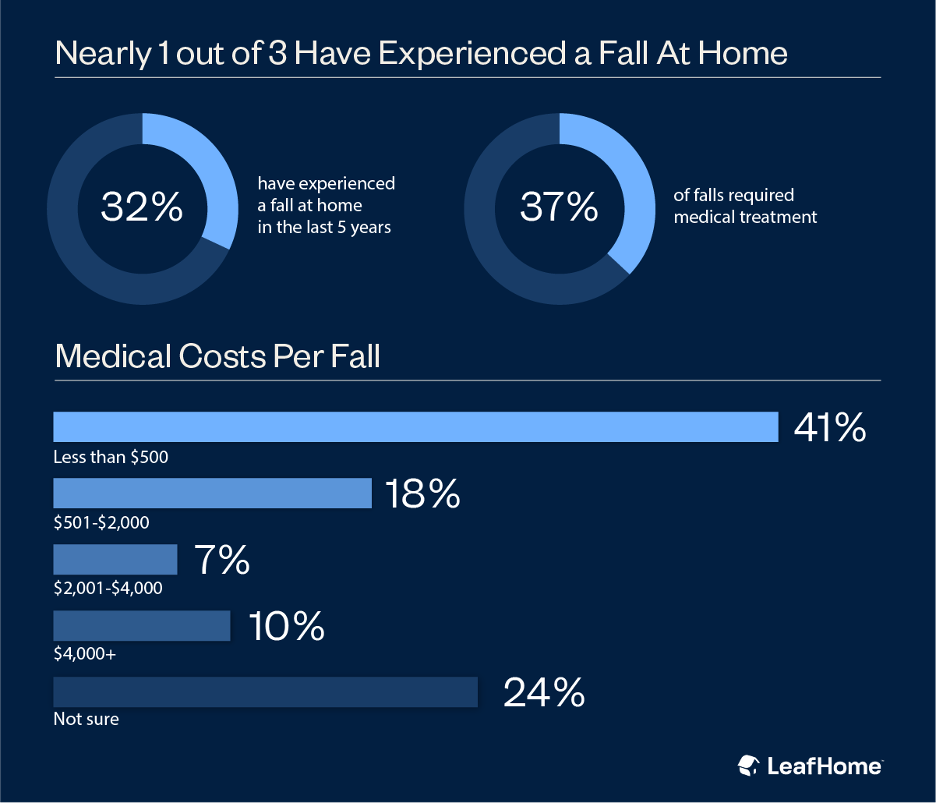
While 37% of people cite cost as a barrier, the reality is that falls can be expensive. The survey found that 32% of respondents have experienced a fall at home in the last five years. Of those falls, 37% required medical treatment.
Medical Treatment Required After Falls:
- ER Visit: 19%
- Outpatient Care: 18%
- Hospital Stay: 4%
- Ongoing Rehab: 3%
The bills for these incidents add up quickly. While 41% of treatments cost less than $500, nearly 10% of respondents reported medical costs exceeding $4,000.
Taken together, the data highlights a key disconnect: cost is often cited as a reason for delaying home modifications, yet the financial impact of a fall can rival or exceed the cost of preventive changes. For many homeowners, waiting does not eliminate expense — it simply shifts it.
Stairs and bathrooms together account for 14% of all reported falls, underscoring the role proactive home modifications can play in reducing both physical and financial risk.
Modifications Work
Here is the good news: Home modifications deliver results.
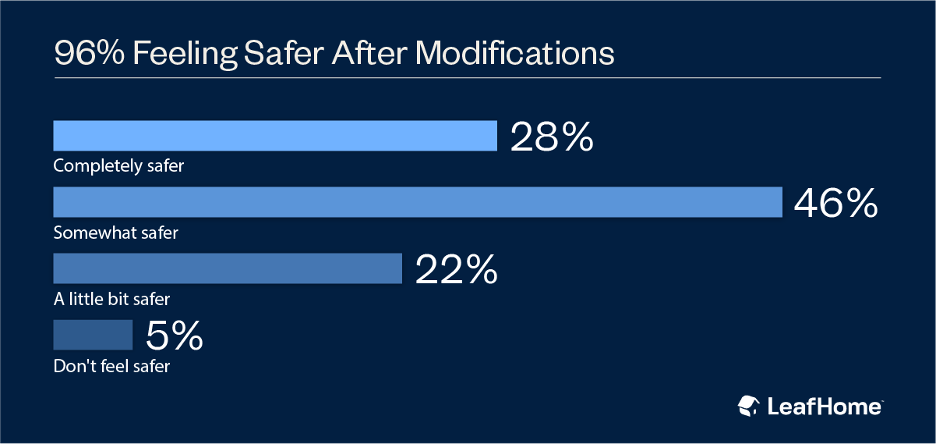
The survey found that 96% of those who made modifications report feeling safer in their homes. Only 5% reported feeling no improvement.
How Much Safer Do People Feel?
- Completely safer: 28%
- Somewhat safer: 46%
- A little bit safer: 22%
Whether you are looking for a fully wheelchair accessible home or simply want to navigate your stairs with confidence, the data validates the investment.
The high effectiveness rate, combined with the regret data, creates a powerful message: Modifications work, and most people wish they had made them sooner.
The Importance of Timely Home Modifications
The data tells a story we can change. Americans who want to age in place recognize where the biggest challenges are — stairs and bathrooms — yet many delay taking action. In fact, half of respondents say they wish they had made home safety changes sooner, often held back by the belief that modifications aren’t needed yet.
What’s clear is that action matters. After making safety improvements, 96% of respondents report feeling safer in their homes, reinforcing that timely changes can meaningfully improve confidence and daily life.
Ready to make your home safer? At Leaf Home, we believe you shouldn’t have to navigate these risks alone. Whether you need a custom stair lift or a safer bathroom solution, we are here to help you age in place with confidence. Let’s get the job done right! Schedule your free, no-obligation estimate today.
Methodology
This survey was conducted via the Pollfish survey platform in December 2025 and January 2026. The sample size consisted of 600 American respondents who explicitly confirmed they want to age in place (remain in their home as long as possible). Fall-related questions were asked only of those who reported falls, and stair lift timing questions were asked only of those who reported stair difficulty.